"How much house can I afford?" is the most common — and most misunderstood — question in home buying. The answer isn't a number a calculator spits out. It's the full monthly cost of owning the home, compared to what you can comfortably pay every month while keeping reserves for life.
Start with debt-to-income (DTI)
Lenders measure affordability using your debt-to-income ratio — the percentage of your gross monthly income that goes toward debt payments, including your new mortgage. Most conventional programs cap your total DTI (front-end + back-end) at 43–50%, depending on the loan and your credit profile. FHA typically allows up to 43% with some exceptions.
- Front-end DTI: Your housing payment (PITI + HOA) ÷ gross monthly income. Ideally under 28%.
- Back-end DTI: All debts (housing + car + student + cards) ÷ gross monthly income. Ideally under 36–43%.
Count the full monthly cost
Your mortgage payment isn't just principal and interest. The real number is PITI — principal, interest, taxes, and insurance — plus any HOA and mortgage insurance. Here's how each piece works in Florida:
- Principal & interest: Based on your loan amount, rate, and term (15, 20, or 30 years).
- Property taxes: In Florida, roughly 1.2% of the home's value per year is a reasonable starting estimate, but it varies by county and municipality.
- Homeowners insurance: Florida insurance costs are among the highest in the country. Budget 0.6%+ of home value annually, and expect it to vary by flood zone, roof age, and construction type.
- Mortgage insurance: PMI on conventional loans above 80% LTV; MIP on FHA; guarantee fees on USDA. VA has no monthly MI.
- HOA: If the property is in an association, factor the monthly dues into your total payment.
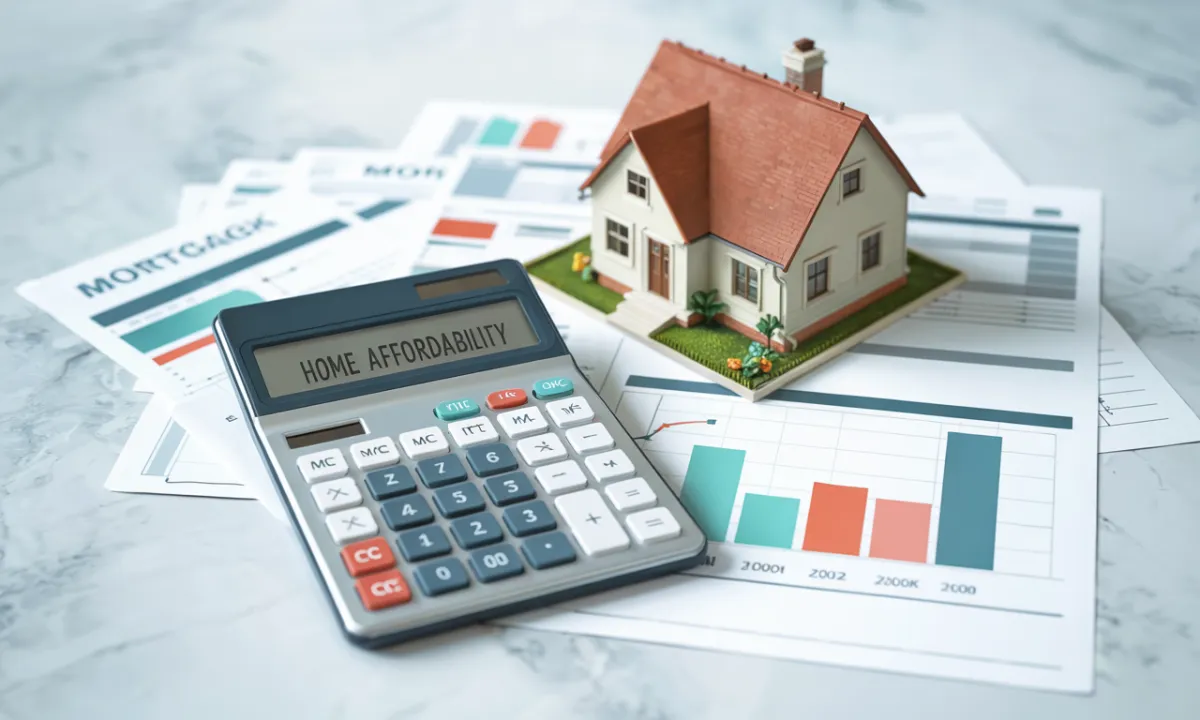
Our mortgage calculator models every one of these by loan program — so you see the true monthly cost, not just P&I.
Don't forget closing costs
In addition to your down payment, expect closing costs of roughly 2–5% of the loan amount — including title insurance, appraisal, origination fees, and prepaid taxes/insurance. In Florida, some costs (like title insurance) follow state-specific customs for who pays. We'll give you an exact, itemized estimate at pre-approval so there are no surprises.
Keep cash reserves
A common affordability mistake: spending every dollar on down payment and closing. Lenders want to see reserves — typically 2–6 months of payments — and you'll want a buffer for the first-year costs every homeowner faces: repairs, furnishing, and the unexpected. Aim to close with at least a few months of payments still in the bank.
Choose the right program for your budget
Your down payment and credit profile determine which programs fit:
- Conventional: 3% down minimum, PMI drops at 80% LTV — best if you have decent credit and want to eliminate mortgage insurance over time.
- FHA: 3.5% down, more lenient on credit — but MIP stays for the life of most FHA loans.
- VA: 0% down, no monthly MI — for eligible veterans and active-duty service members.
- USDA: 0% down in eligible rural and suburban areas — with a modest annual guarantee fee.
The real answer
You can afford a home when the full monthly cost — PITI + HOA + MI — fits comfortably within your DTI limits and you still have reserves after closing. Start with our calculator to model real numbers, then get pre-approved in 24 to 48 hours. We'll tell you exactly what you qualify for — no fluff, no runaround.